
Weather and Climate Dynamics
In the Weather and Climate Dynamics group we study the interactions between different components (i.e., atmosphere, ocean, ice and land) and processes governing the Earth’s system over timescales from days to millennia.
Project status
Content navigation
About
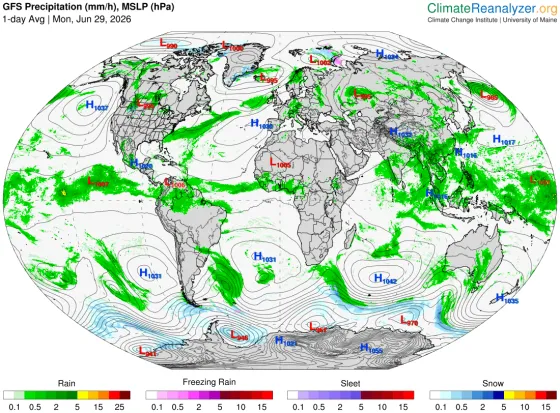
We are interested in the physical processes, governed by thermodynamics and fluid mechanics, that explain our weather, climate variability and long-term change. We apply various statistical techniques on observational datasets and state-of-the-art climate model (i.e., general circulation model) outputs to identify weather and climate phenomena and to understand these physical processes. Our projects aim to better understand and predict high-impact weather events, such as precipitation extremes and droughts, and their relationships with large-scale climate drivers like El Niño–Southern Oscillation and Indian Ocean Dipole. Existing research programs include:
1. Using global coupled climate models to investigate the dynamics, impacts and future changes in modes of climate variability. Specifically focusing on Single Model Initial-Condition Large Ensemble (SMILE) modelling to investigate the forced response to greenhouse gases and internal variability, and ENSO research to understand the dynamics, teleconnections and ENSO itself in a warming world.

2. Atmosphere–ocean coupling and inter-basin interaction involving the Indian Ocean. We evaluate the interactions between the atmosphere and ocean regulating the Indian Ocean variability and regional weather. We also seek to untangle the feedback interactions between the Indian Ocean with other basins like the Pacific Ocean.
3. How weather system changes are reshaping droughts. We seek to understand the physical weather system processes that cause droughts to develop, intensify and terminate, how these processes are being shaped by climate change and what this means for future water resources.
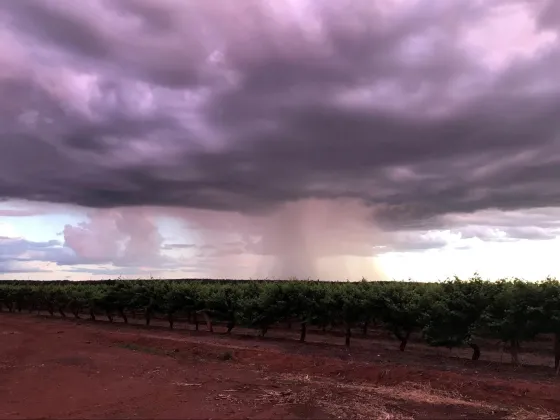
4. Temporal Clusters of heavy rain. Periods of extreme rainfall cause flooding, degradation to water quality, damages to both public and private properties. These impacts dramatically increase when extreme rainfall events occur in close succession. This project aims to identify temporal clustering of these events and by identifying where and when these events occur inform policy makers in better managing flood risk and recovery efforts.
How mid-latitude (extratropical) cyclones regulate key weather resources. We assess the dual role these systems play as both resource providers, through precipitation and wind energy potential, and hazard generators, through flooding, damaging winds, and similar extremes, as well as how these roles may change in a warming future.
Members
Principal investigator

Senior Research Fellow

Lecturer
Researcher

Research Fellow

Senior Research Fellow

Postdoctoral Fellow
Student researcher
PhD Candidate
PhD Student